
Travel Safety
Driving Along Chirala’s Coastal Roads: Safety Tips for Narrow Beach Routes
A practical travel safety guide for driving along Chirala’s coastal roads, including narrow beach routes, opposite vehicles, wind-blown sand, soft shoulders, detours, water crossings, and slow driving near the coast.
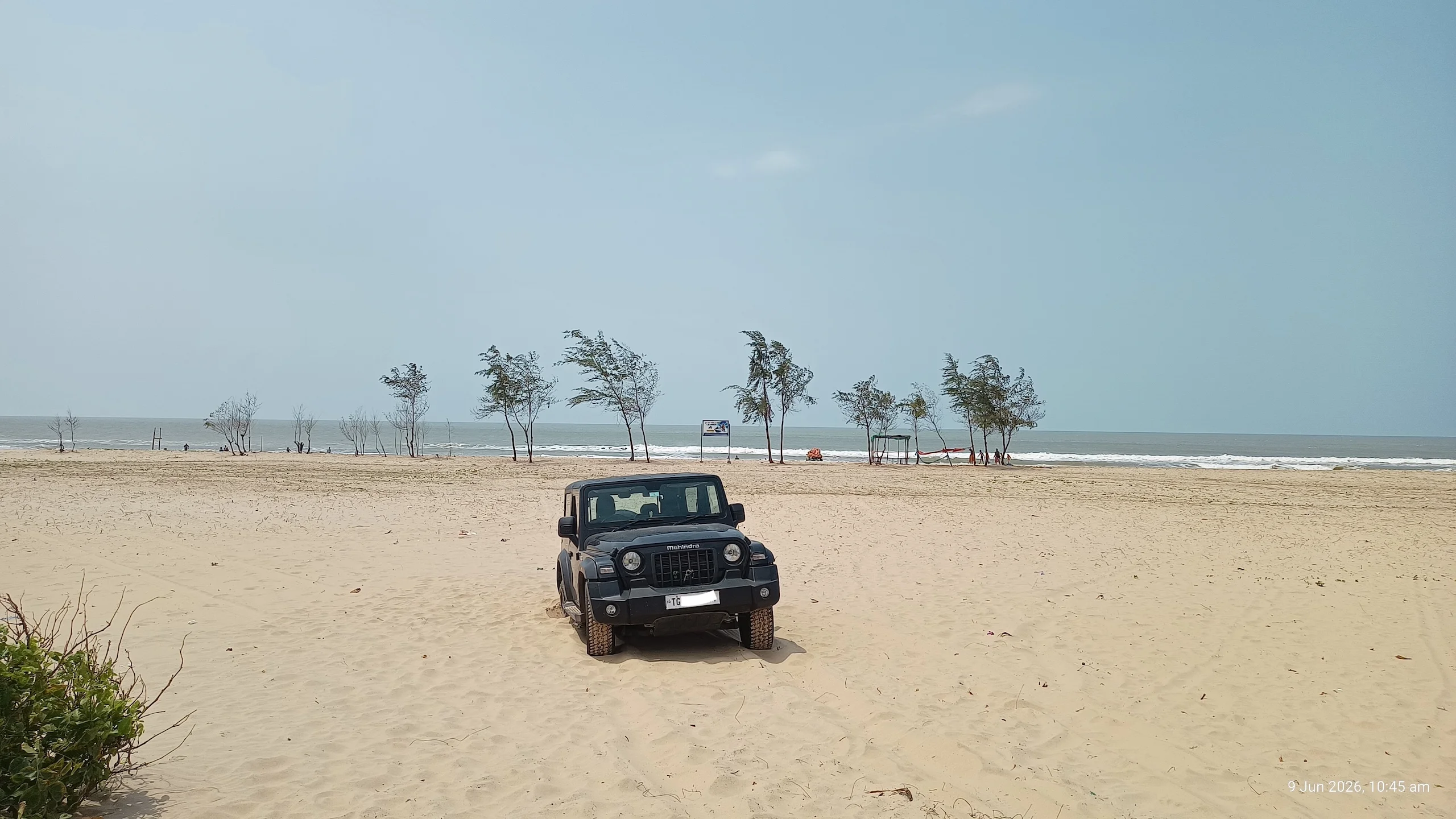
Why Coastal Road Driving Needs Extra Care
Driving towards Chirala’s beaches can be a memorable part of the trip. The road often runs close to open sand, water channels, beach vegetation, resorts, activity areas, and small local settlements. The views are beautiful, but the route can also be narrower and more unpredictable than regular town roads.
Visitors travelling towards Ramapuram Beach, Vodarevu Beach, and nearby coastal stretches should drive slowly and stay alert. Beach-side routes may have sandy patches, uneven shoulders, temporary detours, opposite vehicles in tight spaces, and sudden pedestrian or two-wheeler movement.
Coastal road conditions near Chirala
Some beach routes are scenic but narrow, sandy, and exposed to wind. Plan your drive with patience instead of rushing to the beach.
Drive Slowly on Narrow Beach Roads
Many coastal roads near beaches are not as wide as main roads. In some places, two vehicles may need to adjust carefully while passing each other. Drivers should reduce speed, keep to their side, and avoid sudden movements.
- Slow down before bends, sandy sections, and narrow bridges.
- Give space to opposite vehicles instead of forcing your way through.
- Use the horn lightly at blind turns or narrow stretches.
- Avoid overtaking unless the road is clearly wide and visible.
- Be patient with tractors, autos, bikes, and local vehicles.
On a beach route, reaching safely is more important than reaching quickly.
Watch for Opposite Vehicles
Opposite vehicles can appear suddenly on narrow coastal stretches, especially near resort roads, beach approach roads, sand tracks, and village lanes. Keep your speed low enough to stop safely.
If a large vehicle is coming from the opposite direction, slow down early and look for a safe passing space. Do not move too far onto the shoulder without checking the ground, because beach-side shoulders may be soft, sandy, or uneven.
When the road is narrow, cooperation is safer than competition.
Be Careful with Wind-Blown Sand
Near the coast, wind can blow sand across the road. This may reduce tyre grip, cover potholes, or make the road surface uneven. During windy conditions, sand can also affect visibility for two-wheelers and cars.
- Reduce speed when sand is visible on the road.
- Avoid sudden braking on sandy patches.
- Hold the steering steadily if wind is strong.
- Two-wheeler riders should be extra careful because loose sand can cause slipping.
- Do not park where sand is deep or the vehicle may get stuck.
Expect Detours and Temporary Route Changes
Coastal routes can change because of sand movement, road work, local construction, water flow, or seasonal changes. A familiar route may not always be open in the same way every time.
Follow local guidance and avoid taking risky shortcuts through deep sand or unknown tracks. If a road looks blocked, damaged, or too narrow for your vehicle, turn back and choose a safer route instead of forcing the vehicle through.
- Keep extra time for beach travel.
- Use local directions along with map navigation.
- Ask resort staff or activity operators about the current route.
- Avoid driving through unknown sandy tracks after dark.
- Do not cross temporary water channels unless locals confirm it is safe.
Mind Soft Shoulders and Sandy Edges
Beach roads may have soft shoulders on one or both sides. A road edge can look firm but may be loose sand underneath. Moving too far to the side can make a vehicle sink, slide, or get stuck.
When giving way to another vehicle, slow down and choose a firm, visible section. Avoid taking a car too close to water channels, sand banks, or unfinished road edges. For two-wheelers, sandy edges are especially risky because tyres can lose balance quickly.
Look Out for Pedestrians, Children, and Animals
Beach approach roads are shared by locals, tourists, resort guests, activity operators, two-wheelers, autos, parked vehicles, and sometimes animals. Children may cross suddenly near resorts, food stalls, beach access points, or photo spots.
- Slow down near resorts, restaurants, parking areas, and beach entrances.
- Watch for people taking photos from the roadside.
- Give space to pedestrians and two-wheelers.
- Do not speed near families walking to the beach.
- Use headlights in low visibility, but avoid harsh high-beam use near people.
Activities that may affect beach road traffic
Some beach activities can bring more vehicles and foot movement near the coast. Drive carefully around activity zones and parking areas.
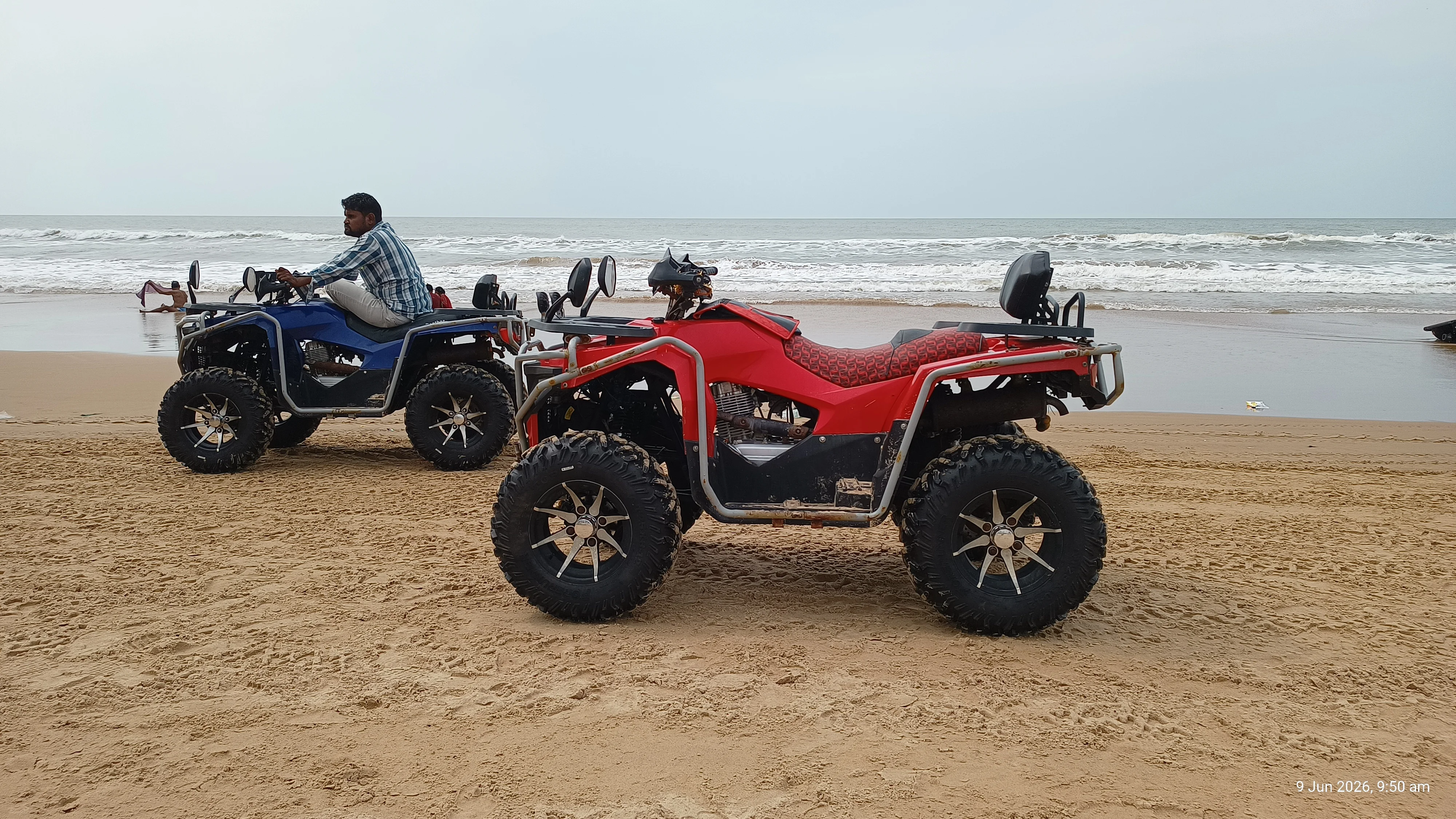
Experience the excitement of riding a powerful ATV (All-Terrain Vehicle) along the scenic shoreline of Ramapuram Beach. Feel the ocean breeze, enjoy the vast sandy stretches, and create unforgettable memories with this adventure activity that combines speed, fun, and stunning coastal views.
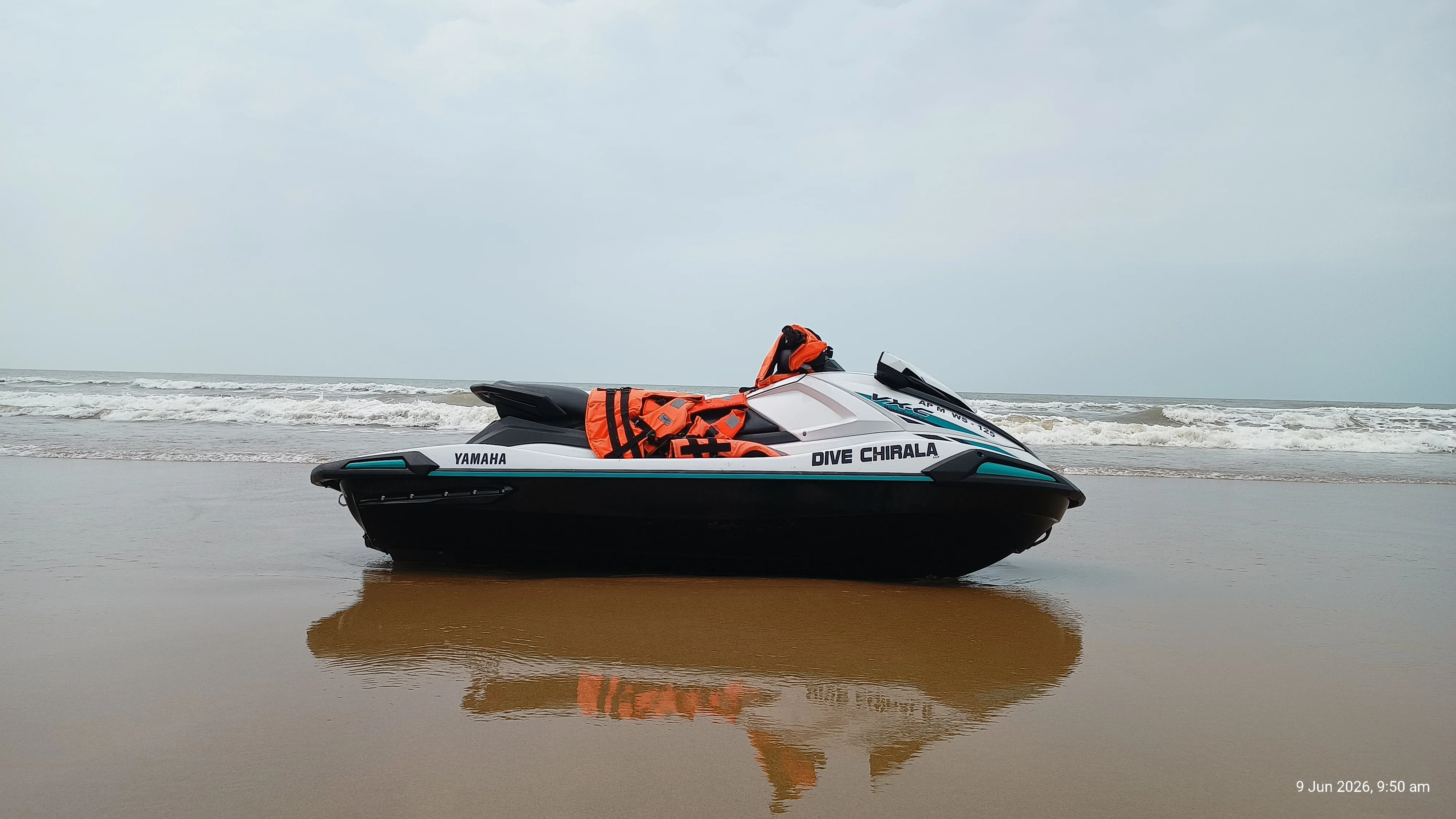
Enjoy jet skiing at Ramapuram Beach in Chirala with Dive Chirala Water Sports. Ride a Yamaha-powered jet ski across the waves, starting from ₹800 per ride, with trained crew support, safety guidance, and beachside access near popular Chirala resorts.
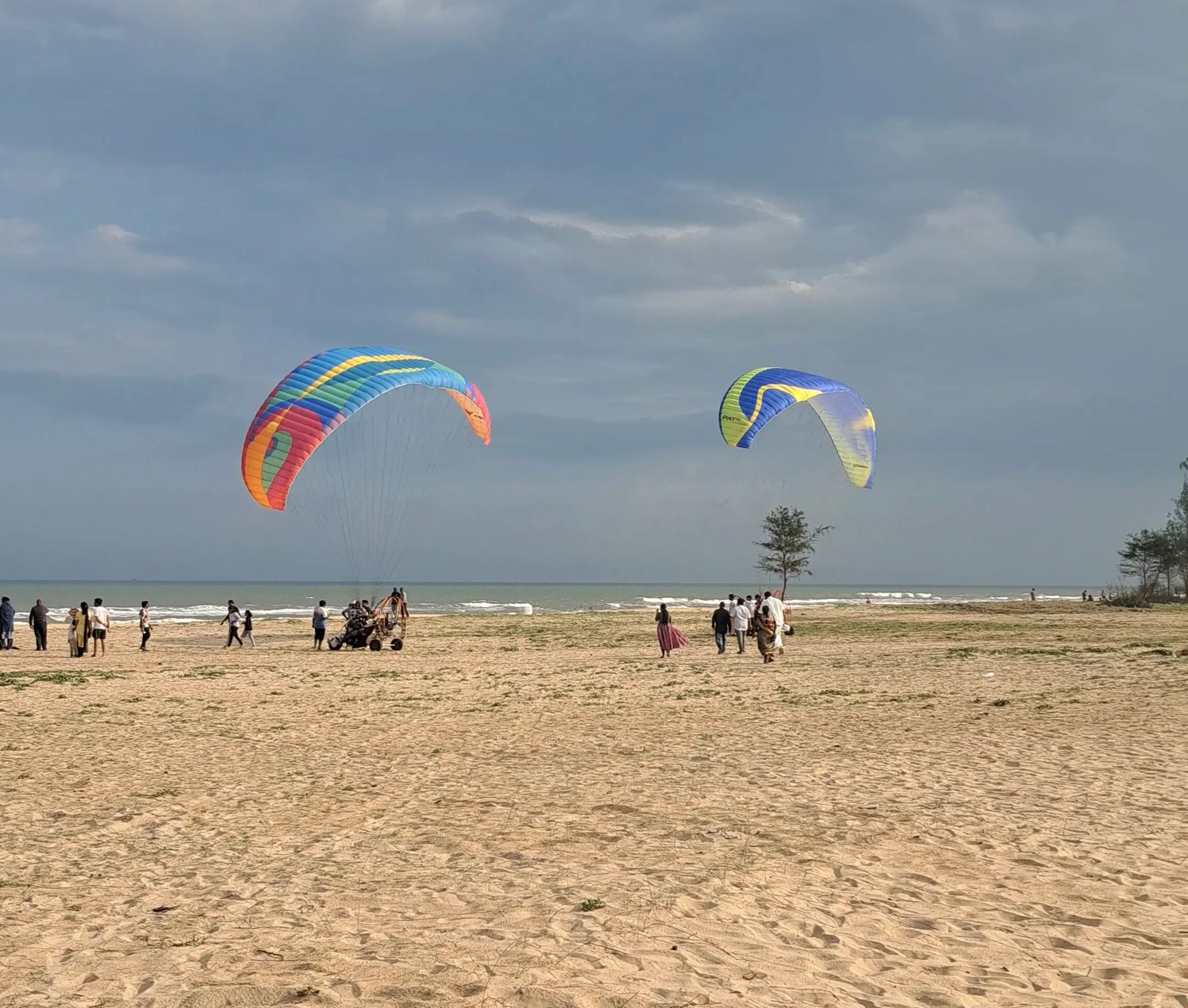
Try paramotoring and powered paragliding at Ramapuram Beach, Chirala, near Rivera Beach Resort with Vihang Adventures. Enjoy aerial views of the Chirala coastline, trained crew support, and adventure rides starting from ₹2,500.
Avoid Driving Too Close to the Water
Some visitors may feel tempted to take vehicles close to the beach or sandy water edges for photos. This is risky. Sand near the water can be soft, uneven, and unstable. Vehicles can get stuck, and sudden water movement can make the situation worse.
Park only in safe and permitted areas. Do not drive onto the beach unless it is clearly allowed and guided by local authorities or authorised operators. Respect warning boards, local instructions, and environmental restrictions.
Be Extra Careful After Sunset
Coastal roads can become more difficult after sunset because visibility drops and road edges may not be clear. Wind-blown sand, parked vehicles, pedestrians, and unmarked turns become harder to notice.
- Prefer reaching your stay or beach spot before dark.
- Use headlights and drive slowly after sunset.
- Avoid unknown detours at night.
- Do not stop in isolated or poorly lit stretches unless necessary.
- Keep emergency contacts accessible before starting the drive.
On chiralatourism.com, important emergency contacts are available through the Emergency button at the top of every page.
Quick Checklist for Coastal Road Driving
- Drive slowly on narrow beach routes.
- Give way carefully to opposite vehicles.
- Reduce speed on sandy patches.
- Avoid sudden braking on loose sand.
- Do not move onto soft shoulders unless safe.
- Expect detours and ask locals about current road conditions.
- Watch for pedestrians, children, two-wheelers, and parked vehicles.
- Do not drive close to the water or deep sand for photos.
- Avoid unknown beach tracks after dark.
- Keep emergency contacts handy before travelling.
Plan your Chirala beach drive before you start
Check nearby resorts, beach activities, routes, and emergency contacts so your coastal trip feels relaxed and safe.
View emergency contactsDriving along Chirala coastal roads FAQs
Are coastal roads near Chirala narrow?+
Some beach approach roads and coastal stretches can be narrow, sandy, or uneven. Drivers should slow down and be careful while passing opposite vehicles.
Is sand on the road dangerous for vehicles?+
Yes. Wind-blown sand can reduce tyre grip and hide uneven patches. Drive slowly and avoid sudden braking or sharp turns on sandy sections.
Should I follow map shortcuts near the beach?+
Use caution with shortcuts near the coast. Some routes may be sandy, blocked, or affected by water flow. Ask locals or resort staff before taking unfamiliar detours.
Can I drive my car onto the beach for photos?+
Avoid driving onto beach sand unless it is clearly permitted and safe. Vehicles can get stuck in soft sand, and beach areas may have safety or environmental restrictions.
What should I do if my vehicle gets stuck in sand?+
Do not accelerate aggressively because it can make the tyres sink deeper. Ask for local help, keep people away from moving wheels, and contact roadside or emergency support if needed.